This Blog is Evolving

As the Curriculum for Wales heads towards full realisation, this Blog will evolve to cover wider education developments in Wales.

It will still of course include items on the curriculum and supporting reforms, but will also touch on wider school issues, Further and Higher Education, the full spectrum.

Its title will also change, becoming the Education Wales Blog.

As ever, if you have ideas or requests for items which would be useful to you and fellow practitioners, please let us know.

Headteacher conference: Curriculum for Wales and School Improvement

See this post in Welsh

A tightly-packed 90 minute conference explored curriculum implementation and the evolving approach to school improvement on March 23rd.

Opening addresses by Minister Jeremy Miles and Estyn’s Owen Evans were followed by a vibrant panel discussion featuring three headteachers: Owain Gethin Davies from Ysgol Dyffryn Conwy, Edward Jones from Pencoed Comprehensive School, and Michelle Jones MBE from Lansdowne Primary School; along with Professor Graham Donaldson and Professor Dame Alison Peacock.

See the full recording below:

And see the resource page from the day here.

Publishing a Curriculum Summary – useful examples

See this post in Welsh

Once a school has developed its Curriculum for Wales, by law it must publish a summary for interested parties to see.

Each school and setting’s context is different and so there are no fixed templates, no absolute rules about how summaries should be presented. As to content, currently the recommendation is that they show:

  • how practitioners, learners, parents, carers and the wider community have been engaged to inform the curriculum’s development
  • how the curriculum meets the required elements set out in the national Framework, starting from the four purposes
  • how the school is approaching learning progression and its arrangements for assessment
  • how the curriculum will be kept under review, including the process for feedback and ongoing revision

Being inventive and responding to differing contexts, colleagues have used various ways of presenting curricula. With wholehearted thanks to them and the education partners who forwarded their examples, we’re pleased to share them below.

Ysgol Gymraeg Gwenllian (Welsh medium primary) – combines Welsh Government context with an engaging video story of the four purposes brought to life through the story of Gwenllian, and encourages a feedback cycle to inform their iterative design.

Ysgol Pen Rhos (Dual langauge primary) – a rounded example that shows how the curriculum is put together, describes assessment and ongoing review with stakeholders to make sure the curriculum is working.

Ysgol Gyfun Gwyr (Welsh medium secondary) – the clear structure shows section by section how the curriculum blends the school’s vision for pupils with mandatory requirements, including Assessment.

Ysgol Gynradd Gymraeg Gellionnen (Welsh medium primary) – thorough and clear, with the clickable options to look deeper, showing the four purposes in full.

Heronsbridge School (Special school) – a thorough introduction to the curriculum in a school that has learners with a wide range of additional learning needs including a centre for pupils with autism. More detail available behind accessible top-level slides.

Coety Primary School (English medium primary) – a brief clear introduction offers the option of a PDF with a detailed but accessible overview of the school’s approach across each aspect of the curriculum.

Corpus Christi High School (English medium secondary) – the School isn’t introducing the Curriculum for Wales until September, but this shows the thought processes about curriculum and assessment design as they plan for introduction.

Ysgol Iolo Morgannwg (Welsh medium primary) – engaging and clear, this summary shows how stakeholders have been involved in shaping the curriculum, and how local aspirations have been blended with the national framework.

Ysgol Nantgwyn  (English medium all-through school) – Clear and easy to understand, from engagement and priorities through to curriculum, this also describes a 3-16 curriculum where some pupils are experiencing Curriculum for Wales whilst some older pupils remain on the previous curriculum.

Chepstow school (English medium secondary) – Chepstow has chosen a six minute video featuring teachers and pupils to describe their curriculum. It relates mandatory elements to the school’s context and exemplifies learning in curriculum Areas.

New case study films: curriculum, transition, assessment, progression…

See the case study area on Hwb or use the links below.

Developing our approach to transition at Jubilee Park Primary School

How has curriculum design been developing at Fitzalan High School

Developing a shared understanding of progression at Fitzalan High School

Read more

See a similar post in Welsh

Even as the curriculum resource review work continues at pace – see our recent blog post – some great new material is being added.

Below, Jubilee Park Primary School describe their approach to transition. Fitzalan school explain their approach to curriculum design, progression, assessment, pupil progress meetings and quality assurance.

See the case study area on Hwb or use the links below.

Developing our approach to transition at Jubilee Park Primary School

How has curriculum design been developing at Fitzalan High School

Developing a shared understanding of progression at Fitzalan High School

Read more

Updates to the Curriculum for Wales Guidance – and Hwb resources page

See this post in Welsh

The Curriculum for Wales Guidance has been updated. The changes are mainly additions or amendments to existing sections.

Future updates will be made each January, so practitioners can be sure that it is completely up to date all year. January has been chosen to fit best with curriculum planning cycles in schools and settings.

This year’s updates include:

  • A revised ‘Journey to Curriculum roll-out’ section to reflect that the curriculum is now being implemented
  • Some clarifying narrative on Welsh histories in the Humanities Area
  • Corrections to some definitions and hyperlinks
  • More clarity through minor amendments to narrative – in response to feedback

The ‘last updated’ date at the bottom of each page will reveal whether a change has been made.

Alongside this, a new Hwb Resources and Supporting Materials page has been published to make resources specific to the Curriculum for Wales easier to find. A project to review all Hwb resources to align them with the curriculum and identify resource gaps is also underway, as featured in this previous blog post. Practitioners are warmly invited to take part in the resources review work, with training, support and compensation provided to schools of those that do. Contact the team at: curriculumforwales@gov.wales

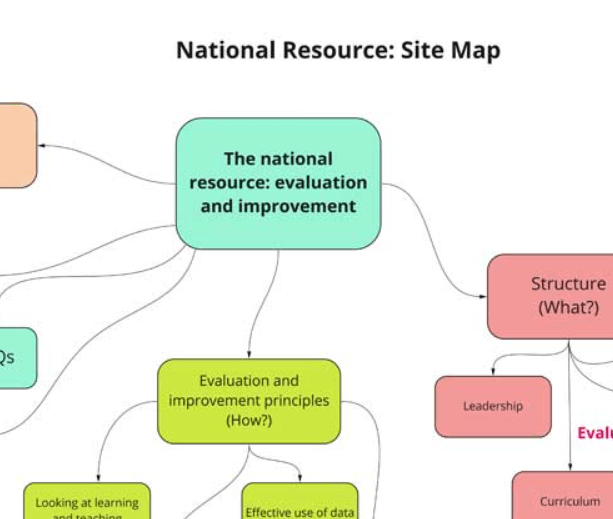
New and updated case studies to support the National Resource: Evaluation and Improvement (NR:EI)

See this post in Welsh

Sixteen new case studies developed by schools that helped create the National Resource: Evaluation and Improvement have now been published on Hwb.

They’re there to show how the prompts in the Resource can be usefully applied to self-evaluation and improvement, with practical examples of approach and outcomes.

All the previous case studies have also been updated, showing the effect the approaches applied have had on school improvement.

Aligning Hwb resources with Curriculum for Wales – can you help?

See this post in Welsh

Resources on Hwb are currently being reviewed to align with our new Curriculum and make them easier to find. It’s a huge task that will run until all 5,000 plus resources are reviewed, and practitioners are invited to help.

A new Resources landing page has been designed to host the resources and support materials, which are being organised to fit each Area of the Curriculum.

Practitioners and Welsh Government staff  are well underway with the review work, using the resources guide as their reference point, but more practitioners are invited to get involved. You will use your knowledge and expertise to assess resources, and at the same time get a real sense of what’s available.

Training sessions will be provided, setting out the approach, modelling the process with real resources, and demonstrating supporting tools.

Supply cover funding at £250 pro rata per day will be provided to your school or setting if you are able to help with this important work.

With agreement from your headteacher, please do email the review team at CurriculumforWales@gov.wales , including information under the headings listed below.  

Name

Email

School/setting

Primary/Secondary/Special

Welsh/English medium

Area of input/interest – Expressive Arts, Health and Well-being, Humanities, Languages, Literacy and Communication, Mathematics and Numeracy, Science and Technology, Foundation learning [please include details of other specific curriculum aspects you may hold expertise in – eg RSE, literacy, numeracy, digital, outdoor learning, etc].

In April this year, ‘Adnodd’, a new resources company, will be formed to enable learners, practitioners and parents/carers in Wales access to high quality educational resources and supporting materials in both Welsh and English, to support the teaching of the Curriculum and its qualifications.   It will enable the production of resources through strategic and coordinated working with practitioners, publishers and developers to create high quality resources for schools and learners.

Bowel Cancer – Pontypridd High School learns and shares

See a similar post in Welsh

Recognising that colorectal cancer cases within our local authority (Rhondda Cynon Taf, RCT) is the fourth most common cancer, and higher than the Wales average, an initial partnership was formed between Pontypridd High School and the Moondance Cancer Initiative charity in 2019. Pontypridd High worked with a range of health professionals based within the University Health Board of Cardiff and the Vale. The aim was to deliver an education programme that could support the work of health colleagues in relation to this critical, but treatable health issue. The programme would be authentic, meaningful and relevant to our pupils and adults in the local community.

A focus for the learning programme has been to improve the pupils’ understanding of cancer and in particular bowel cancer from causes to screening and recovery rates. The importance of screening as a part of this learning is crucial because early diagnosis and treatment brings much higher survival rates. Screening data shows that in some areas of the school catchment the uptake for those eligible adults is below 50% against a national average that is above 60%.

Responding to that stark statistic, pupils have used their learning to help make a difference in their community, working through the learning programme to pass on this important message to parents, carers and other family members.

Building on the successful pilot work at Pontypridd High, the project grew in 2021/22 to include six RCT secondary schools within the Cwm Taf Morgannwg Health Board region. The partnership and collaboration between education and health professionals has been fundamental to the quality of resources and learning included in this programme and each school has been able to develop new delivery models, in their own way – in their localities.

Cwm Taf Morgannwg UHB conducted their own evaluations of the work of the six schools and concluded there had been 115% rise in requested bowel screening kits in the local area of RCT where the six schools delivered the programme. This compared to a 22% increase in a neighbouring part of the local authority. Furthermore, they reported that there had been a 72% rise in the number of screening tests returned in our area which is a significant and the health board confirmed that the work in schools had contributed greatly to this improvement.

The impact on pupil engagement has also been clear, with each school evolving the project as it introduces Curriculum for Wales in Years 7 and 8. Lessons have developed cross-cutting skills and involved Science and Technology, Languages, Literacy and Communication, and Health and Well-being, the authentic context bringing real-world learning into the classroom.

Co-ordinator Marie Sidoli says “Pupils see the ‘why’ of learning when they work with real health statistics such as those for bowel cancer and they are highly engaged. And of course the whole project fits naturally with the four purposes.”

Read more

Thank you all and a Merry Christmas!

See a similar post in Welsh

The Curriculum for Wales is now a reality for all our primary schools and many of our secondaries. Thank you teachers, learning support assistants, school leaders and all school staff for your help in making it a reality for your pupils.

The stock of supporting resources will continue to grow in 2023 thanks to the kindness of schools in providing playlists or welcoming our film crew to capture them in action. Some highlights from 2022 are below, but if you feel you have an interesting perspective to share, please let us know!

And a Christmas message to you all!

48 Professional Learning resources, in one list, with links

See this post in Welsh

In response to popular demand, a terrific group of resources developed by schools, for schools, has been consolidated in an easy-to-search PDF.

Forty-eight playlists/presentations are included, covering staff professional learning, developing a whole school vision, curriculum implementation, modelling learning leadership, and establishing a culture of change.

The resources do all feature on Hwb, but this quick reference list takes most of the searching out of searching.

For the full background and underpinning knowledge, see the Professional learning Journey on Hwb.